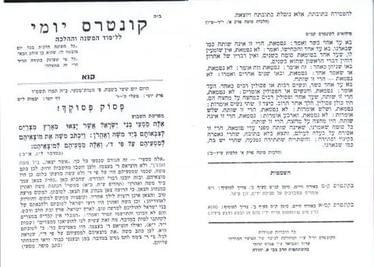
Collaboration on the Mishna

Rabbi Yehuda's collaboration on the Mishna with Pinchas Kehati
Rabbi Yehuda was a prolific teacher who became known in many parts of Israel. He traveled to army bases across the country to teach Torah to soldiers. He was also commissioned to prepare materials for the ביסדי חמד teachers' guide and some מוסד הרב קוק publications. His most popular classes were his Mishna classes, which he broadcast on Kol Israel Radio. Rabbi Yehuda understood that Mishna study was a popular way for modern Jews to connect with Torah study while maintaining a working lifestyle. Many also associated the study of Mishna with commemorating those lost in the Holocaust and the War of Independence.
In 1955, Pinchas Kehati began an ambitious project to prepare a modern Hebrew approach to the Mishna. He sought to help working people access the text and understand the classic commentaries in an easy-to-read pamphlet format. In 1956, Pinchas Kehati hired Rabbi Yehuda to work on the project together. He credited Rabbi Yehuda on weekly publications of their קונטרסים, which featured their work along with selections of halacha and Torah. Their collaboration ended in 1960, partway through the effort, when Rabbi Yehuda moved to the US. Kehati completed the project in 1964. The popular משניות מבוארות books were published shortly after Kehati died in 1976.
The משניות מבוארות (often called the Kehati Mishna or Kehati commentary) serves as a modern and novel commentary enabling an immeasurable amount of Mishna study for the past 50 years. The letter by Rabbi Yehuda to a friend of his (shared below) reveals the intent to collect the wealth of existing commentaries so that traditional Mishna study would be easily accessible to the layperson. Whether the result is a new commentary or a synthesis of existing commentaries is left to the reader to decide. The letter below, however, reveals the great care and effort invested into this project.
We found this letter Rabbi Yehuda sent to R' Leib (we could not identify him), who inquired about his work on the Mishna project. We do not have the original correspondence, but we infer from the response that R' Leib inquired about the effort being invested and perhaps challenged the project's value (or its intended non-yeshiva-attending audience). We share this transcription where Rabbi Yehuda describes his process and justifies the work.
ב״ה מוצאי שבת קודש פרשת אמור. בת ים
לידידי יקירי ר׳ לייב שלט״א
ברוב כבוד וברכה
עז ושלום!
שמחתי בדבריך החביבים דברי שבח ועידוד נוגעים לליבי וערכם רב ביודעי שהם נובעים מתוך הערכה בקורתית וכנות. רצוני רק להוסיף שאין לתאר ולשער כלל וכלל גודל העבודה והמאמצים ומי המושקעים בחיבור הבאור למשנה. הדברים נקראים אולי בקלות ובבמהירות מחמת השפה השוטפת ואולי מחמת הבהרת העניין בקדמה וכו׳, אולם עד שמתחבר הבאור נעשית עבודת פ רך ממש תוך השקעת זעה וזמן רבים .
קודם כל הצורך בלימוד המשנה. הדבר מתבטא בעיון יסודי ומעמיק במשנה ובסוגיות הגמרא שעליה (שלפעמים מפוזרות הן במסכתות או בדפים אחרים)ובכל המפרשים הראשונים (במסכת נדרים-לדוגמא: רש״י, ר״ן,רא״ש, תוספות(על הדף) מלבד זאת הרמב״ן, והרי״ף,ונושאי כליהם. הנמוקי יוסף והריטב״א,( באור מופת וממצה) ולבסוף הביאור המסכם המאירי). פירושים אלה הם בגדר הכרח בכל משנה, אולם פעמים יש צורך ביתר עיון בספרים מאוחרים יותר. זה השלב הראשון.
ורק לאחריו מתחילות הבעיות הממשיות: קביעת דרך הפירוש, צורת הפירוש, מה להדגיש בהקדמה, מה לתת ומה לא לתת, ואיך להתגבר על קשיים פרשניים (הקשורים למלים או לביטויים) שלא עמדו עליהם במיוחד הראשונים ויש לחשפם ולהגלותם.
נראים הדברים אולי כגוזמא, אולם זוהי האמת לאמיתה, שכן, האחריות גדולה מאוד ויש להזהר בזהירות רבה לבלי הכשל בטעות או סטיה כל שהוא. שכן אין כונה להוסיף פירוש לפירושי הענק של רבותינו הגדולים, חס וחלילה שתעלה על המחשבה דעה כזאת! כל כונתינו אינה אלא להקל על הלומד ולתת את כל מה שנתגבש בתורה שבעל פה על המשנה מבחינת הפשט שבה, בלשון מובנת. ומשום כך כל מלה ומלה נשקלת בפלס העיון והבירור. ואין בפירוש שום דבר שאין לו יסוד בפירושים הקדמונים.
ונשאלת השאלה- והיא מטרידה אותי במאוד- האם התוצאה מצדיקה השקעת מאמצים אלו! והאם אין להגיע באותה השקעה להישגים גדולים יותר? ועיקר השאלה היא- האם מושגת התועלת לאלו שתועלת זו מבוקשת לגבם? במלים אחרות: למה ולמי אני עמל?
הארכתי קצת מתוך השתפכות וחוסר רסון עצמי וסלח לי על כך ——.
We include an AI-assisted translation of the origional letter.
B"H Motzai Shabbat Kodesh Parshat Emor. Bat Yam
To my dear friend R' Leib, may you live long and well.
With much respect and blessings, strength and peace!
I was delighted by your kind words. Words of praise and encouragement touch my heart and are of great value, knowing that they stem from critical and sincere appreciation. I would only like to add that there is no way whatsoever to describe or fully estimate the magnitude of the work, the efforts, and the resources invested in composing the following commentary on the Mishnah. The material may perhaps be read easily and quickly because of its fluent style, or perhaps because of the introduction (etc.) that clarifies the topics. However, until the commentary is composed, the work involved is truly backbreaking, investing much sweat and time.
First of all comes the need to study the Mishnah itself. This requires a thorough and penetrating analysis of the Mishnah and of the Talmudic discussions relating to it (which are sometimes scattered across different tractates or on other pages), together with all the classical/primary commentators. In the case of tractate Nedarim, for example, this includes Rashi, the Ran, the Rosh, and the Tosafot (on the page), as well as the Ramban, the Rif and the commentaries on his work, the Nimukei Yosef, the Ritva (whose exposition is exemplary in both clarity and comprehensiveness), and finally the Meiri, whose commentary provides a comprehensive synthesis. These commentaries are indispensable for every Mishnah. At times, however, it is also necessary to undertake further study of later works. That is only the first stage.
Only afterward do the truly difficult problems begin: determining the proper interpretive approach; deciding how the explanation should be structured; choosing what to emphasize in the introduction and what should or should not be included; and overcoming interpretive difficulties—whether involving individual words or expressions—that were not explicitly addressed even by the early authorities and must therefore be identified and brought to light.
This may sound like an exaggeration, but it is the plain truth. The responsibility is extraordinarily great, and one must proceed with the utmost care to avoid even the slightest error or deviation. For the intention is certainly not to add yet another commentary to the monumental works of our great sages—Heaven forbid that such a thought should even arise! Our sole aim is to make the Mishnah more accessible to the student by presenting, in clear and understandable language, the substance of what has emerged in the Oral Torah concerning the straightforward meaning (peshat) of the Mishnah. For that reason, every single word is weighed on the scales of careful study and critical examination. Nothing in this commentary lacks a foundation in the earlier commentators.
Yet your question (remains) — and it troubles me deeply: Does the final product justify such an enormous investment of effort? Might the same expenditure of time and energy have achieved greater results elsewhere? Above all, does it actually benefit those for whose sake this benefit is intended? In other words: Why, and for whom, am I laboring?
I have gone on at some length, carried away by my thoughts and by a lack of self-restraint. Please forgive me for that. --
Job: Ordeal Defiance and Healing
Rabbi Yehuda wrote a study guide for teachers and students on the biblical book of Job. He reviewed both traditional and contemporary analyses of the book. Many focused on issues of theodicy: Why does God allow bad things to happen to good people? His guide explores another dimension of the book often overlooked but essential to finding a path through ordeal to a place of healing. Importantly, Rabbi Yehuda focuses on Job's friends. Their long-winded, philosophical messages that occupy most of the book only re-traumatize the victim rather than support his healing. Whereas the theological explanation that allows for suffering may remain a mystery, friends can help friends heal. Job's friends failed, and that's an eternal lesson for humanity. When our friends face tragedy, what can we say that will help them heal? Only one edition of this guide was published in 1990. It was dedicated to Ben Zion "Benny" Yehuda, Rabbi Yehuda's son from his first marriage who tragically died while serving in the IDF.